

Explore cross-border trade research insights with expert analysis, trends, challenges, and future outlooks in international trade.
The realm of cross-border trade is a fundamental pillar of the global economy, fostering international relations and economic growth. As nations become more interconnected, the significance of understanding the dynamics of cross-border trade cannot be overstated. It involves the exchange of goods and services across international borders or territories, necessitating a comprehensive knowledge of different regulations, tariffs, and market demands. This intricate web of trade relationships requires businesses to adapt to diverse cultures, legal systems, and economic environments.
Historically, cross-border trade has been the engine of globalization, enabling countries to leverage comparative advantages and access resources unavailable domestically. In recent years, technological advancements and digital platforms have revolutionized how businesses engage in international markets, making it more accessible yet more competitive. For professionals, academics, and policymakers, staying informed about the latest trends and challenges in cross-border trade is crucial for strategic decision-making.
**Stay ahead in global business and economics**—explore cutting-edge research and insights with Global Business & Economics Journal. Subscribe today to unlock expert analyses, real-world case studies, and valuable trends that drive success in today’s interconnected marketplace.

Research on cross-border trade plays a pivotal role in understanding the complexities and opportunities of the global market landscape. As businesses strive to expand their reach beyond domestic borders, they face a myriad of challenges, including regulatory compliance, cultural differences, and fluctuating economic conditions. In this context, cross-border trade research provides essential insights that enable businesses to navigate these challenges effectively.
Conducting thorough research equips businesses with knowledge about existing and emerging markets, helping them to identify potential risks and opportunities. Moreover, it aids in evaluating the impact of international trade agreements, tariffs, and non-tariff barriers on business operations. With accurate data and analysis, companies can make informed decisions about market entry strategies, supply chain management, and competitive positioning.
Additionally, cross-border trade research contributes to policy formulation and economic development at the governmental level. By understanding global trade patterns and their implications, policymakers can develop strategies that enhance a country’s trade competitiveness and economic resilience. This research is also instrumental in fostering international cooperation, as it highlights areas where collaboration can benefit mutual trade interests.

In today’s rapidly evolving global marketplace, several key trends in cross-border trade are shaping the future of international commerce. One significant trend is the rise of digital platforms, which are revolutionizing how businesses conduct cross-border transactions. E-commerce giants and online marketplaces have made it easier for companies of all sizes to reach international customers, reducing traditional barriers associated with physical stores and local markets.
Another notable trend is the increasing focus on sustainability and ethical trade practices. As consumers become more environmentally conscious, businesses are pressured to adopt sustainable supply chain practices. This shift not only aligns with consumer values but also opens up new avenues for competitive advantage in global markets. Companies are increasingly investing in green technologies and sustainable sourcing to meet these expectations.
Trade tensions and the realignment of global supply chains also characterize current cross-border trade trends. Geopolitical factors and trade wars have prompted businesses to rethink their supply chain strategies, leading to diversification and a shift towards regional trade agreements. This trend is evident in the growing importance of regional trade blocs, such as the Comprehensive and Progressive Agreement for Trans-Pacific Partnership (CPTPP) and the African Continental Free Trade Area (AfCFTA), which aim to simplify trade within regions.
Moreover, the integration of advanced technologies like artificial intelligence (AI) and blockchain in trade operations is transforming logistics and finance. These technologies enhance transparency, reduce transaction costs, and improve efficiency, enabling businesses to streamline their cross-border operations effectively.
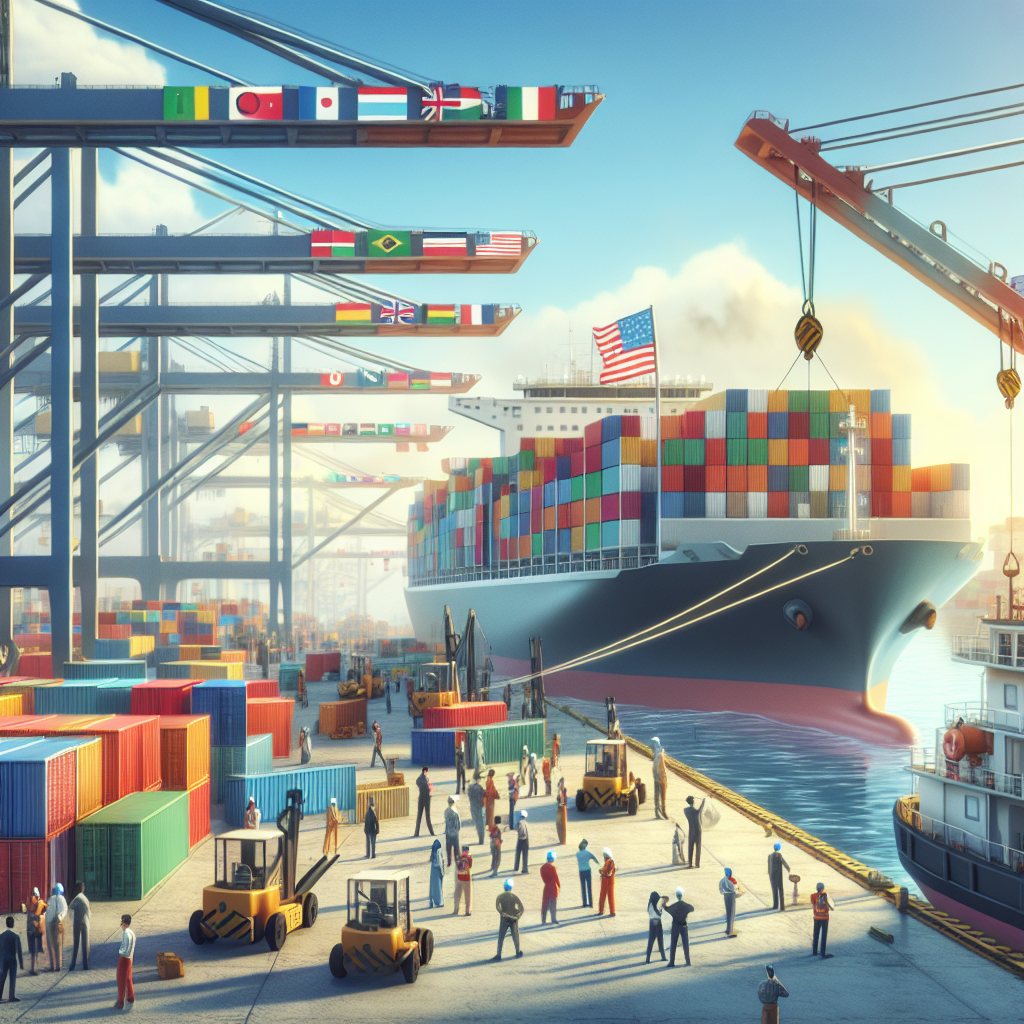
Despite the vast potential of cross-border trade, conducting research in this area presents a myriad of challenges. One of the foremost difficulties is the complexity of diverse regulatory environments across countries. Each nation has its own set of trade laws, tariffs, and non-tariff barriers, which can make it arduous for researchers to gather consistent and comparable data.
Another significant challenge is the rapid pace of change in global trade dynamics. Economic policies, geopolitical tensions, and technological advancements can quickly alter the landscape, requiring researchers to frequently update their datasets and methodologies. This necessity for agility can strain resources and complicate longitudinal studies, which are crucial for understanding long-term trends.
Language and cultural differences also pose obstacles in cross-border trade research. Language barriers can hinder communication and the accurate interpretation of data, while cultural nuances may affect consumer behavior and business practices in ways that are difficult to quantify. Researchers must navigate these complexities to ensure their findings are relevant and applicable across different contexts.
Furthermore, access to reliable data is a perennial issue. In many developing countries, data collection infrastructure is lacking, leading to gaps in available information. Even where data exists, it might be inconsistent or outdated, complicating efforts to conduct thorough analyses. Researchers often have to employ creative methodologies or rely on secondary data sources, which can affect the robustness of their conclusions.
Finally, maintaining neutrality and objectivity can be challenging in an increasingly politicized global trade environment. Researchers must carefully navigate potential biases and ensure their work is based on sound evidence and analysis, rather than influenced by political or economic pressures.

In the realm of cross-border trade analysis, selecting an appropriate methodology is crucial for producing accurate and actionable insights. One of the most prevalent approaches is the use of econometric models, which allow researchers to quantify relationships between trade variables and predict outcomes based on various scenarios. These models can incorporate multiple factors such as exchange rates, tariffs, and GDP growth, providing a comprehensive view of trade dynamics.
Another widely used methodology is case study analysis. By examining specific instances of cross-border trade, researchers can gain a deep understanding of the factors that contribute to success or failure. This qualitative approach is particularly useful for exploring the impact of cultural, political, and institutional differences on trade activities. Case studies provide rich, contextual insights that are often not captured by quantitative models.
Network analysis has also become increasingly popular, especially in understanding the complex interdependencies between countries and industries in global trade networks. This methodology helps identify key nodes and links within the trade system, offering a visual representation of how goods, services, and capital flow across borders. Network analysis can reveal vulnerabilities and opportunities within the trade network, aiding policymakers and businesses in strategic decision-making.
Furthermore, input-output analysis is a robust tool for examining the ripple effects of trade across different sectors of an economy. By analyzing how outputs from one industry serve as inputs to another, this methodology can illuminate the interconnectedness of economic activities and the potential impacts of trade policies.
Finally, the integration of big data and machine learning is revolutionizing cross-border trade analysis. These cutting-edge technologies enable researchers to handle vast datasets and uncover patterns that were previously invisible. Machine learning algorithms can predict trade trends with remarkable accuracy, offering a forward-looking perspective that traditional methods may lack.
The future of cross-border trade is poised for transformative changes driven by technological advancements, shifting geopolitical landscapes, and evolving consumer preferences. As digitalization continues to permeate global markets, we can expect increased efficiency and reduced costs in trade processes. Technologies such as blockchain and artificial intelligence are expected to streamline supply chains, enhance transparency, and reduce fraud, making international transactions more reliable and secure.
Geopolitical shifts, including trade agreements and economic policies, will also play a significant role in shaping future trade dynamics. New trade partnerships are likely to emerge as countries seek to diversify their economic ties and mitigate risks associated with over-reliance on specific markets. This trend could lead to a more multipolar trade environment, with emerging markets playing a more prominent role in global commerce.
Moreover, the rise of e-commerce is set to revolutionize cross-border trade, as businesses of all sizes can access international markets with greater ease. This shift not only opens new opportunities for exporters but also demands robust logistics and regulatory frameworks to support the growing volume of online transactions.
Sustainability will become an increasingly important consideration, as both consumers and businesses prioritize environmental and social governance. This shift may lead to new trade policies that incentivize sustainable practices and penalize those that are environmentally harmful.
As these trends unfold, staying informed about the latest research and insights becomes critical for success. Stay ahead in global business and economics—explore cutting-edge research and insights with Global Business & Economics Journal. Subscribe today to unlock expert analyses, real-world case studies, and valuable trends that drive success in today’s interconnected marketplace.


Large financial institutions are seeking a review of the 12% annual interest rate ceiling on housing loans as market conditions tighten.

Repeated judicial rulings have failed to align bureaucratic practice with legal standards regarding vehicle taxation for interstate transfers.


Ministers are shifting toward an interventionist strategy to prevent homegrown technology companies from scaling abroad.
At Global Business & Economics Journal, we contribute to the future of business and technology with news, innovative research, expert insights, and thought-provoking analysis.
